A Zion National Park winter visit works differently from the rest of the year. Days are cool, nights fall well below freezing, and shaded trails can stay icy even when the afternoon feels mild. For much of the season you can drive the canyon yourself instead of riding the shuttle, but a short holiday shuttle period interrupts that. This guide covers the weather, road and shuttle access, closures, and the hikes that suit a Zion winter, using National Park Service (NPS) information throughout. For the rest of the year, see our Zion National Park travel guide.
Key points
- Expect daytime highs around 50–60°F and nights well below freezing, with ice on shaded trails.
- Private vehicles can usually use Zion Canyon Scenic Drive from December through February, except during the holiday shuttle period.
- NPS lists no shuttle service from November 29 to December 25, 2026, then holiday service from December 26, 2026 to January 2, 2027.
- Bring traction devices for your boots. The Narrows will likely need a drysuit.
- Some services close for the season, including South Campground and the Zion Human History Museum.
In this guide
Zion National Park winter conditions at a glance
| Topic | What to expect |
|---|---|
| Daytime temperatures | Typically 50–60°F, according to NPS |
| Nights | Well below freezing |
| Snow | Usually melts within hours in the lower canyon after storms; accumulates at higher elevations |
| Biggest hazard | Ice on shaded trails; some trails close for falling ice |
| Scenic Drive | Usually open to private vehicles December–February, except the holiday shuttle period |
| Shuttle | Per NPS’s schedule updated October 2026: none November 29–December 25; holiday service December 26–January 2; generally runs March through November |
| Park hours | Open 24 hours a day, year-round |
| Zion Lodge | Open year-round with reduced services |
| Camping | Watchman Campground open year-round; South Campground closes seasonally |
| The Narrows | Cold water; NPS says a drysuit is likely needed; closed above 150 cfs |
NPS notes that schedules are subject to change. Check the park’s shuttle page and conditions page before you travel.
Month by month: December, January and February
NPS publishes average climate figures for Zion Canyon. They show a gradual shift from December through February.
| Month | Average high | Average low | Days below 32°F | Average precipitation | Record daily snowfall |
|---|---|---|---|---|---|
| December | 54°F | 30°F | 18 | 1.6 in | 8.0 in |
| January | 54°F | 30°F | 20 | 1.8 in | 12.5 in |
| February | 59°F | 34°F | 13 | 2.0 in | 8.0 in |
These are long-term averages from NPS’s climate chart, so individual days can be much colder or warmer.
December. Average highs reach the mid-50s, with 18 days on average below freezing. Shuttle service is the main variable: NPS lists none until December 25, then holiday service from December 26.
January. This is the coldest month in the NPS data, with an average of 20 days below freezing and a record daily snowfall of 12.5 inches. The scenic drive is usually open to private vehicles, apart from the first days of January if holiday shuttles are still running.
February. Highs average 59°F and freezing days drop to about 13, so February is the mildest of the three. NPS’s seasonal guidance still applies: ice lingers in shade and snow is possible.
Weather, snow and ice
NPS describes winter in Zion as “solitude and snow (sometimes).” Daytime highs of 50–60°F are typical, with overnight lows well below freezing, and day and night temperatures can differ by more than 30°F. Nearly half of the annual precipitation in Zion Canyon falls between December and March.
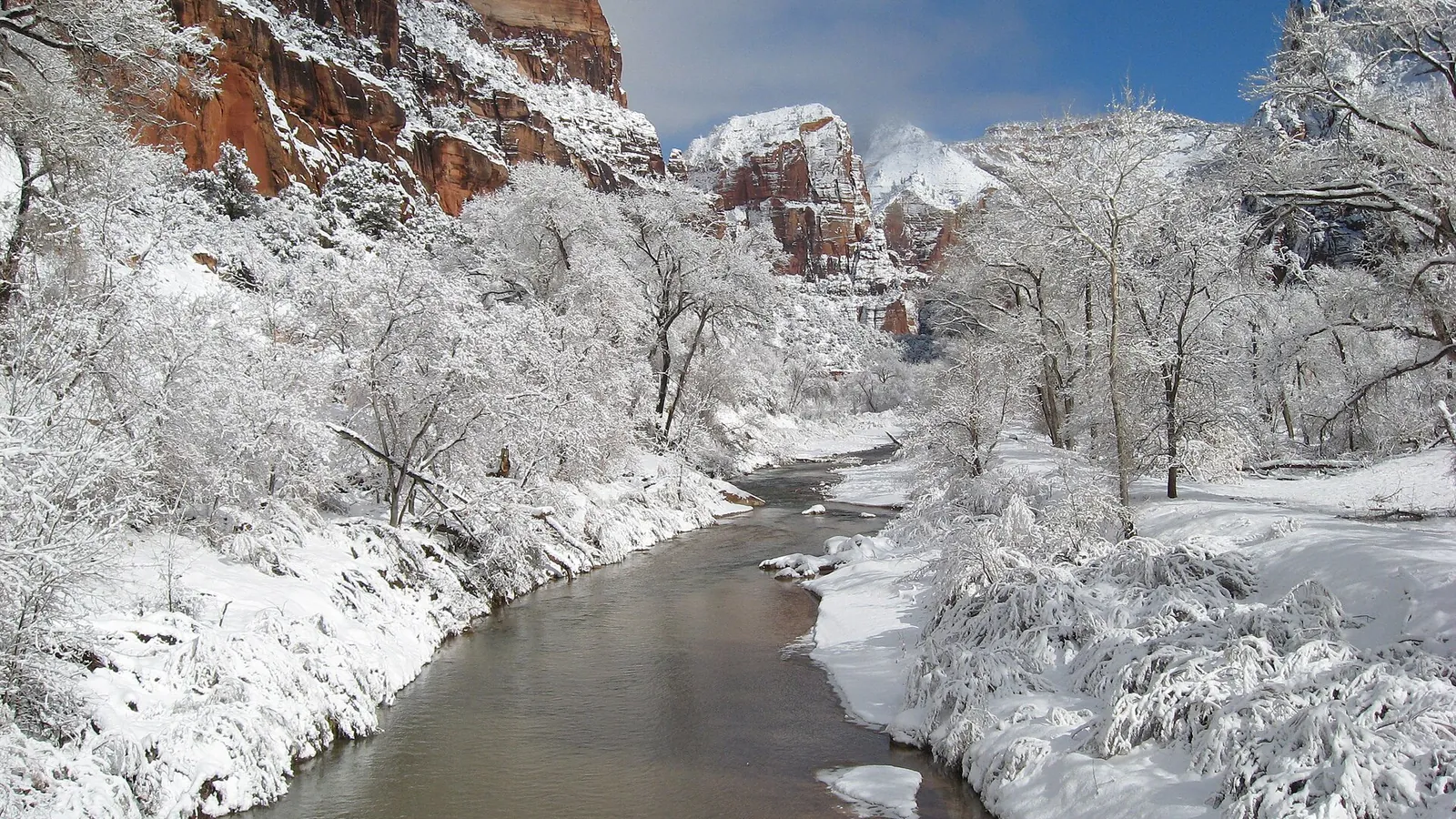
Snow behaves differently by elevation. After winter storms, snow in the lower canyon typically melts within hours, while it accumulates at higher elevations. That is why the canyon floor can look clear while the plateaus above are white.
Ice is the practical problem. NPS says icy conditions can exist on trails, especially anywhere that stays in shade, and recommends traction devices for your boots. Roads are plowed, but certain trails may close because of falling ice.
Storms can slow things down. NPS warns that driving conditions can be very poor during a storm, though roads are usually plowed quickly afterward. The Zion–Mount Carmel Highway is open year-round when possible but sometimes closes for snow, ice, rockfall or congestion, so check road status before you commit to the east entrance.
Shuttles, driving and parking
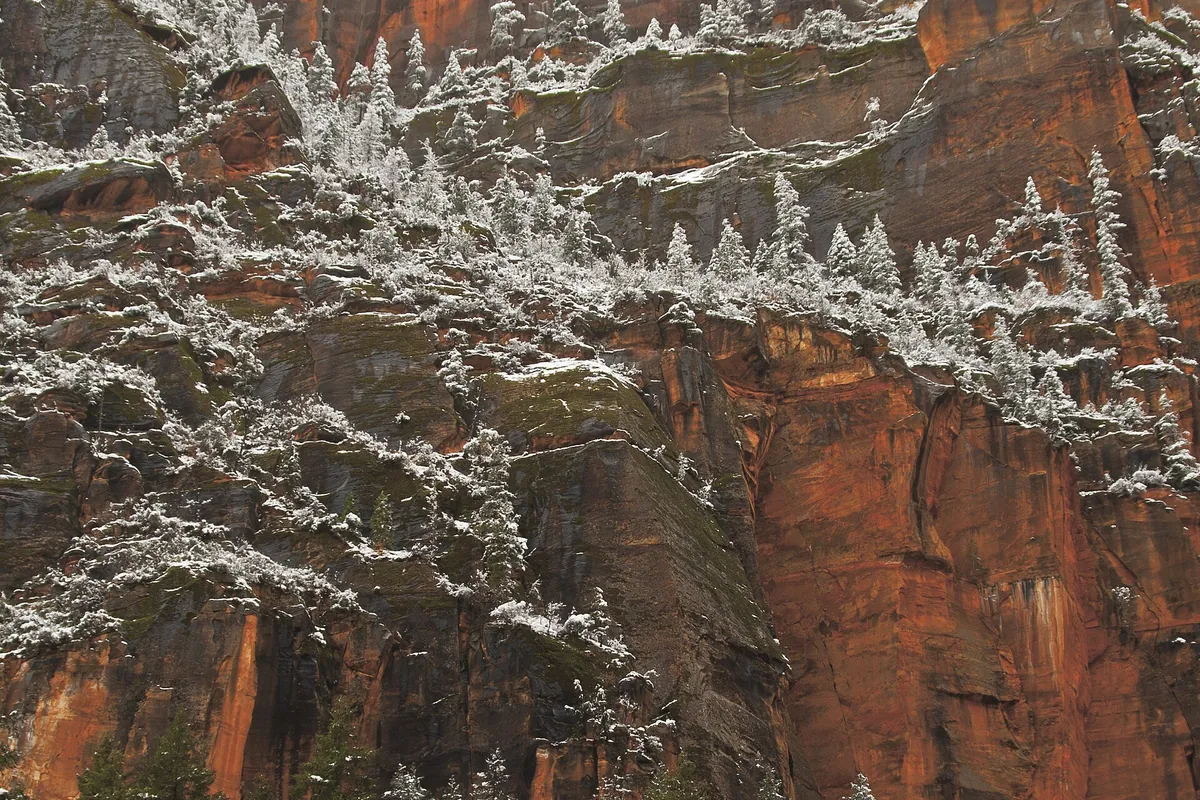
Winter access in Zion Canyon depends on the date, and this is the most common point of confusion. The dates below come from NPS’s shuttle schedule page, last updated October 4, 2026. NPS lists them without a year and says they are subject to change. They also shift from season to season: NPS’s 2025–26 winter schedule had private vehicles on the Scenic Drive from December 1 to 22 and shuttles from December 23 to January 3. Treat the dates as a pattern and confirm them for your trip.
- Most of December through February: Zion Canyon Scenic Drive is usually open to private vehicles, because the shuttle is not running. NPS says the non-shuttle season is “usually December through February.”
- November 29 to December 25, 2026: NPS lists no service on either the Zion Canyon Line or the Springdale Line.
- December 26, 2026 to January 2, 2027: Holiday shuttle service runs. On the Zion Canyon Line, the first shuttle leaves the Visitor Center at 8:00 am and the last leaves at 4:30 pm, with the last bus out of the canyon leaving the Temple of Sinawava at 5:45 pm. The Springdale Line runs from 8:00 am to 6:00 pm. During this period the scenic drive is closed to private vehicles.
NPS warns that parking lots in the canyon often fill early in the day. If the lots are full, the road can be temporarily closed. Paid parking is available in Springdale, and you still pay the park entrance fee. Because winter schedules shift slightly from year to year, treat the dates above as the current NPS listing and confirm them before your trip.
Closures and reduced services
NPS lists the park itself as open 24 hours a day, year-round. Other services change in winter:
- Zion Lodge: open year-round with reduced services.
- Campgrounds: Watchman Campground stays open year-round. South Campground and Lava Point Campground close seasonally.
- Zion Human History Museum: closed in winter, according to NPS.
- Kolob Terrace Road and Lava Point: the upper road and Lava Point typically close from fall into spring, and the Kolob Canyons road closes often in bad weather.
- Trails: as of NPS’s latest update, Hidden Canyon was closed and the East Rim Trail was partly closed after rockfall. Falling-ice closures can also appear after cold snaps.
Visitor center hours change with the season, so verify them on the NPS hours page before you plan a stop.
What to do in Zion National Park in winter
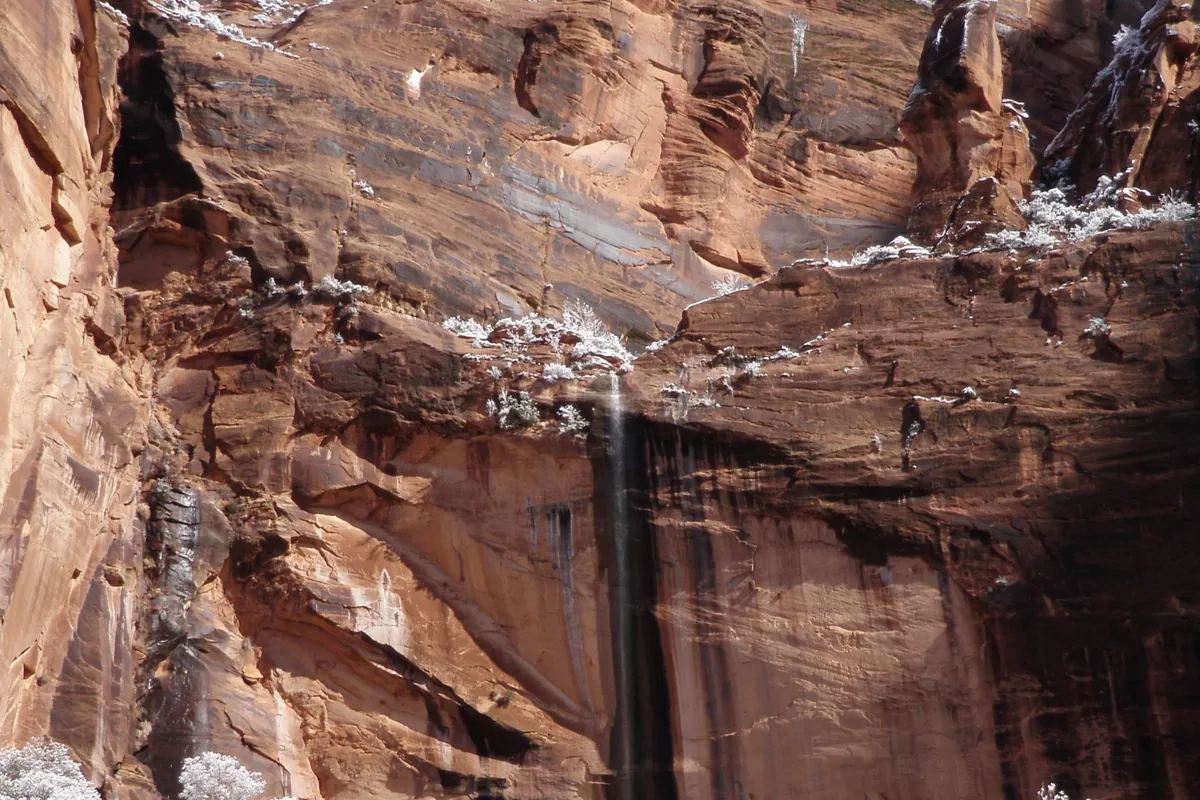
Hike the lower-canyon trails, with traction
The easier canyon trails are the most dependable winter walks. NPS has issued ice warnings for specific trails such as the Pa’rus Trail and Weeping Rock Trail, so carry traction devices even on a trail that looks flat. Paved paths such as Pa’rus and Riverside Walk are the lowest-risk options when conditions are good. For trail-by-trail distances and access details, see our guide to the best hikes in Zion National Park.
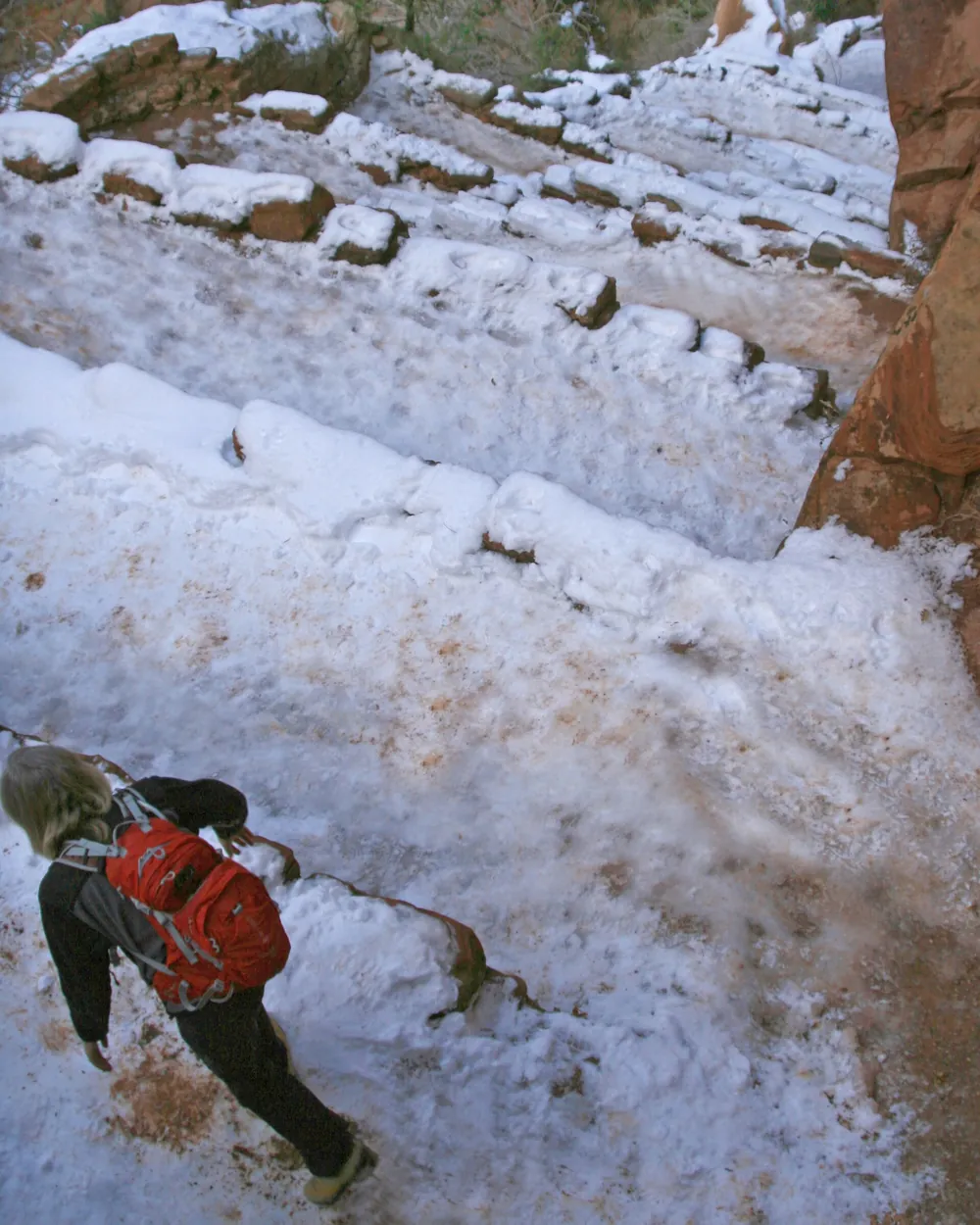
NPS notes that trails starting at lower elevations often climb through cold, shaded areas that stay icy even after snow melts elsewhere, as on the Walter’s Wiggles switchbacks to Scout Lookout shown below.
Check the Angels Landing permit lottery early
A permit is required for Angels Landing’s chain section all year. NPS runs a seasonal lottery for each three-month period; for hikes from December 1 through February 28, applications are accepted from October 1 to 20, with results on October 25. A day-before lottery also exists, and dates change from year to year, so confirm them on the NPS permit page. The chains are very cold in winter, so gloves may help, and NPS advises against the climb on wet or icy rock. Many hikers choose to stop at Scout Lookout in winter conditions.
Enjoy the scenery from the road
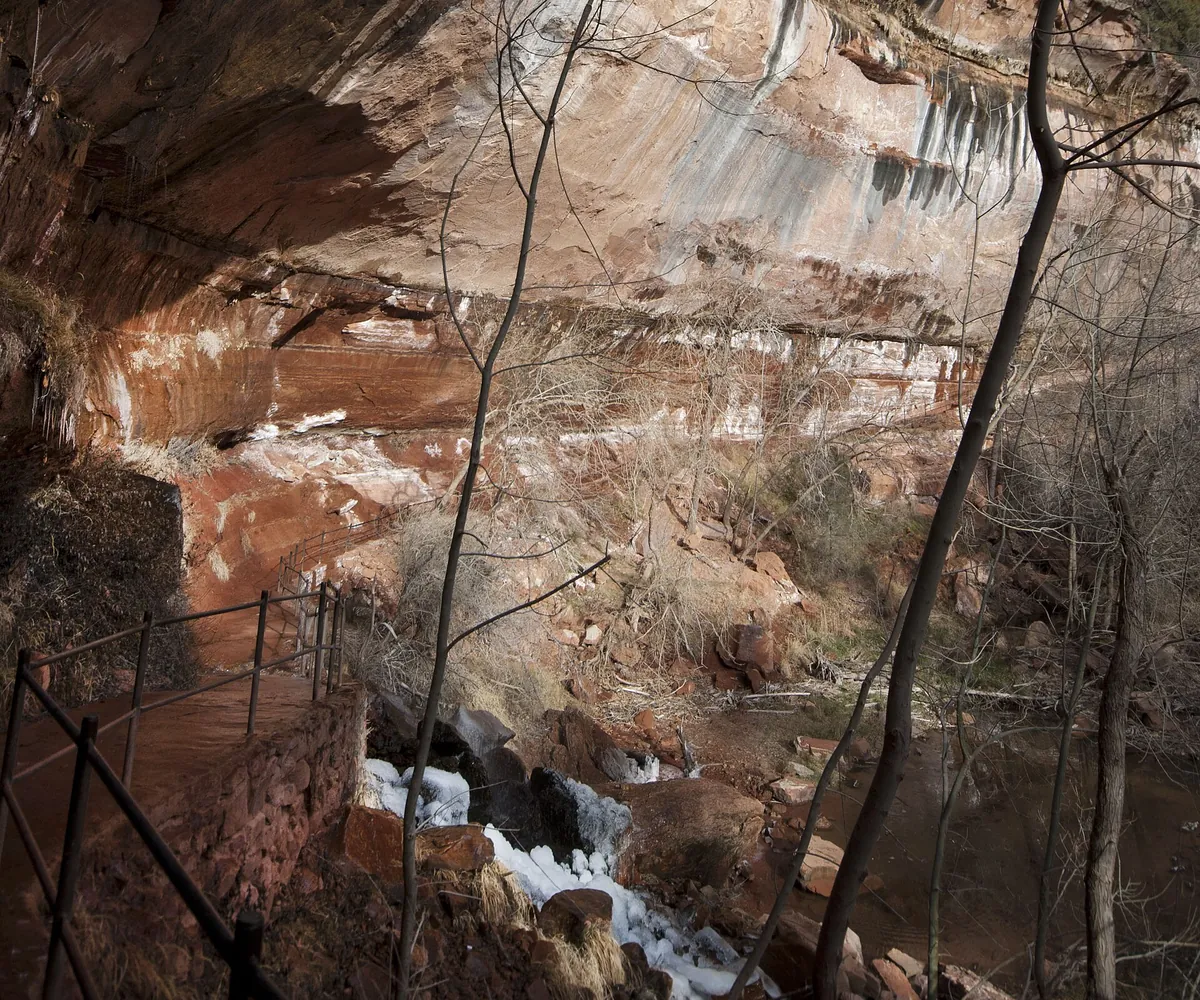
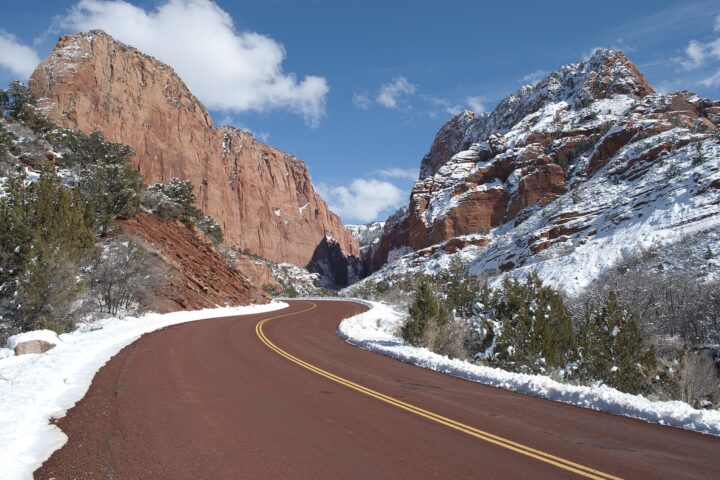
With the scenic drive open to private vehicles in most of the season, you can stop at pullouts and short viewpoints without waiting for a shuttle. NPS photo captions also note that snowmelt often creates winter waterfalls, including one near Weeping Rock. Cold air and shade make footing less certain at viewpoints, so keep traction devices on even for short stops.
Treat The Narrows as a cold-water trip
NPS says winter and early spring commonly bring high water levels and cold water, and that you will likely need a drysuit to hike The Narrows safely. The route closes when river flow exceeds 150 cubic feet per second or when a flash flood warning is issued. Do not treat the bottom-up hike as a casual wade in winter.
A sample winter day in Zion Canyon
This outline assumes one day and a scenic drive that is open to private vehicles. It is a planning example built from NPS guidance, not a fixed route.
- Before you leave: check NPS conditions and road status. If you hold an Angels Landing permit, print or download the confirmation, since NPS says phone service is unreliable at the checkpoint.
- Morning: arrive early, because canyon parking lots often fill early. Start with a paved walk such as the Pa’rus Trail or Riverside Walk, with traction devices on.
- Midday: walk the Lower Emerald Pool trail, about 0.6 mile one way from Zion Lodge. NPS notes ice and snow can persist in shady corners there, so go slowly.
- Afternoon: stop at scenic drive pullouts and head out before dark.
If your dates fall in the December 26 to January 2 holiday period, plan around the shuttle instead: NPS lists the first Zion Canyon Line bus at 8:00 am and the last bus out of the canyon at 5:45 pm, and warns against waiting for the last bus.
Is winter a good time to visit?
A Zion National Park winter trip suits visitors who want a calmer canyon and are comfortable adjusting plans for ice and weather. NPS’s own seasonal page titles winter “solitude and snow (sometimes).” The trade-offs are shorter days, shaded icy trails, closed facilities and, for part of the season, a schedule that changes how you enter the canyon. If your priority is the full Narrows experience or long high-elevation hikes, other seasons may suit better.
What to bring
NPS’s winter advice is to carry traction devices, layers, plenty of food and water, and a flexible plan. Use this as a checklist:
- Traction devices for your boots (NPS recommends them for winter trails)
- Warm layers you can add or remove
- Plenty of food and water
- Printed or downloaded Angels Landing permit confirmation, if you have one
- Gloves if you plan to use the Angels Landing chains, which NPS says are very cold in winter
- Quick-drying clothing if you will be near the river
- For The Narrows: a drysuit, closed-toe shoes or boots, and a hiking stick or pole (NPS recommends these; the park does not rent gear)
- Your park entrance fee or pass
Allow extra time for shaded sections, and turn around if ice makes the footing uncertain.
Planning your Zion National Park winter trip
- Check dates first. The shuttle gap from November 29 to December 25, 2026 and the holiday service afterward drive how you reach the canyon.
- Start early. Lots fill early in the day, and daylight is limited in winter.
- Keep options open. If a trail closes for ice or rockfall, shift to a lower-effort walk.
- Look at conditions the morning you go. NPS updates its conditions page for closures, road status and alerts.
Common questions
Is Zion National Park open in winter? Yes. NPS lists the park as open 24 hours a day, year-round, though some facilities close seasonally.
Can you drive into Zion Canyon in winter? Usually yes from December through February, except during the holiday shuttle period when the scenic drive is closed to private vehicles.
Does it snow in Zion? Yes, but snow in the lower canyon typically melts within hours after storms, while higher elevations accumulate it.
Can you hike The Narrows in winter? Only in suitable conditions and with proper gear. NPS says you will likely need a drysuit, and the route closes at high flow or with a flash flood warning.