The best things to do in Zion National Park come down to a short list: ride the shuttle up Zion Canyon, walk at least one canyon-floor trail, pick one bigger hike if you have the time and the conditions, and drive the east side of the park on the Zion–Mt. Carmel Highway. Everything else is about logistics, which in Zion means the shuttle, permits for a few famous routes, and a seasonal rhythm that changes how you enter the canyon. This guide is the planning hub for our Zion coverage: it explains the park, then points to a dedicated guide for each decision. Figures come from the National Park Service (NPS) and were checked in October 2026.
Key points
- Entry: NPS lists $35 per private vehicle (valid 1–7 days). No reservation is needed to enter or ride the shuttle.
- Shuttle: The free Zion Canyon shuttle replaces private cars on the scenic drive during its season. NPS lists no service from November 29 to December 25, 2026.
- Permits: Required for Angels Landing’s chain section, top-down Narrows trips, canyoneering and wilderness camping. Not for the bottom-up Narrows day hike.
- Time: One day covers the highlights; two or three days let you add a bigger hike and the quieter corners.
- Check first: Trail closures, shuttle dates and fees change. Use the NPS pages linked below on the morning you go.
Table of Contents
Zion National Park at a glance
| Topic | What to know |
|---|---|
| Entrance fee | $35 per private vehicle (1–7 days), $30 motorcycle, $20 per person on foot or bike; youth 15 and under free. Non-US residents 16 and older pay an extra $100 per person unless they hold an annual or America the Beautiful pass. NPS page updated June 2026. |
| Hours | The park is open 24 hours a day, year-round; visitor center hours change by season. |
| Getting around Zion Canyon | Free shuttle during its season; private vehicles usually allowed on the scenic drive from December through February. |
| Permits | Angels Landing chain section, top-down Narrows, canyoneering, wilderness camping. |
| Lodging inside the park | Zion Lodge is the only lodging in the park, according to NPS. |
| Information | Park phone 435-772-3256; rangers answer 10 am to 5 pm Mountain Time. |
Fees and passes can change, so confirm on the NPS fees page. For US citizens and residents, NPS lists the remaining 2026 fee-free days as October 27 and November 11. Non-US visitors still pay the nonresident fee on those days. NPS also says to keep your pass with you: you must show it if you leave and re-enter, for example after parking in Springdale.
Best things to do in Zion National Park
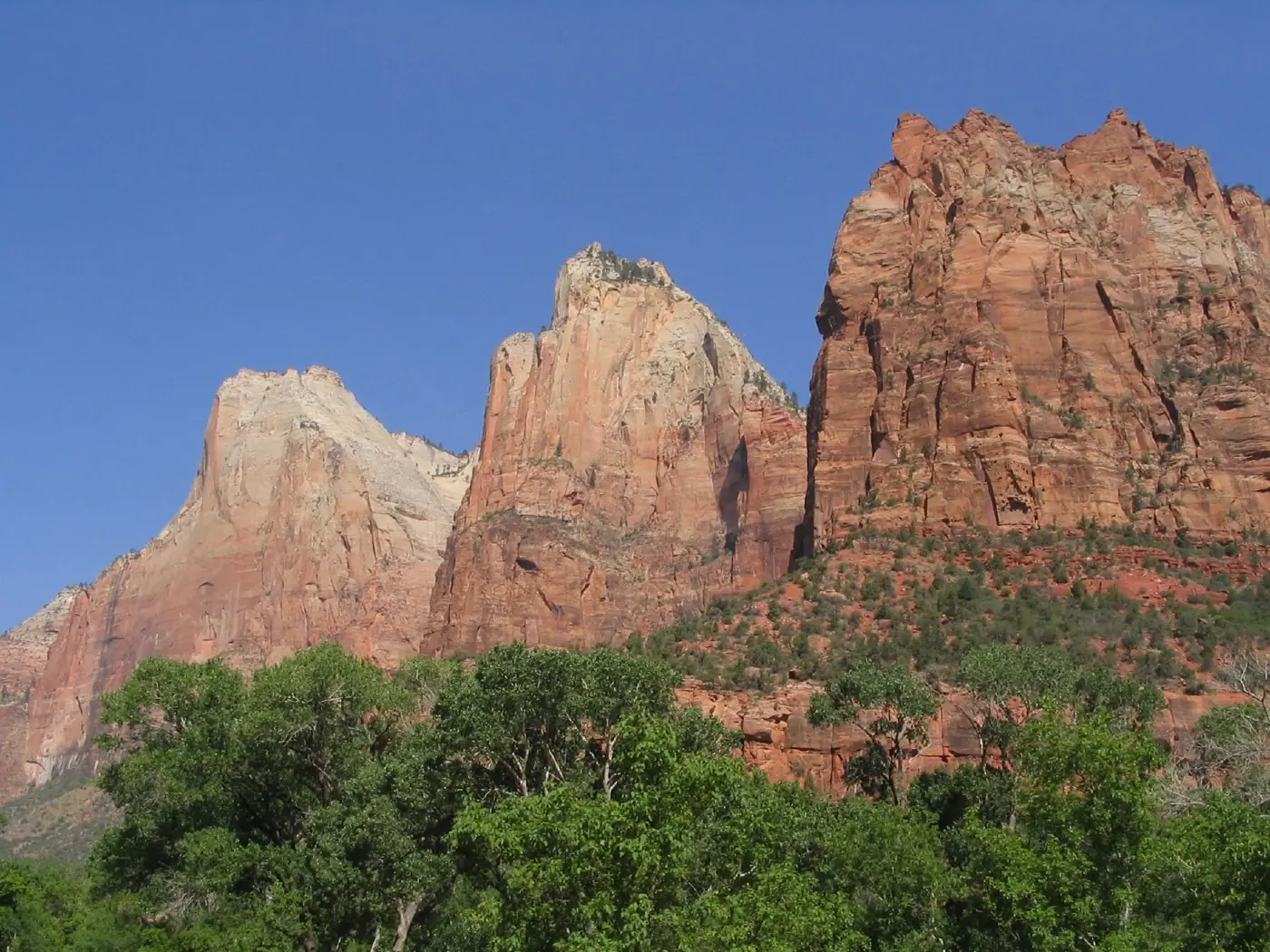
If this is your first visit, these experiences give the fullest picture of the park without requiring a permit or a full day:
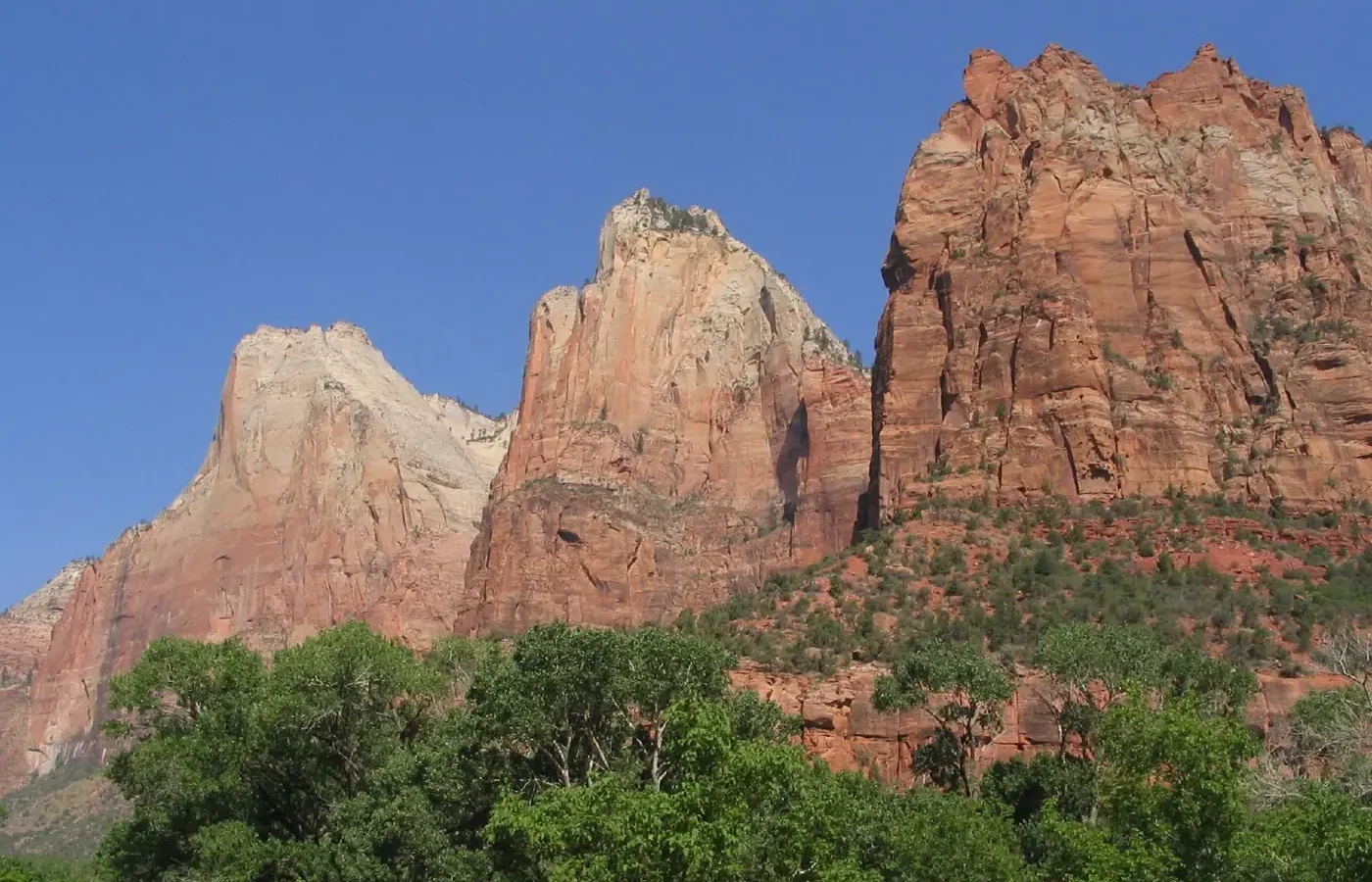
- Ride the Zion Canyon shuttle to the end of the road. The Temple of Sinawava is the last stop. NPS says the ride takes about 45 minutes from the visitor center, and the ride shows you the canyon’s cliffs, the Court of the Patriarchs and the access points for most trails.
- Walk Riverside Walk. A mostly flat paved walk of about a mile along the river, ending where The Narrows river hike starts. It suits almost any age and fitness.
- Walk the Pa’rus Trail. A paved path beside the Virgin River from the visitor center toward Canyon Junction; bicycles are allowed.
- Stop at Canyon Overlook. About 1 mile round trip, just east of the Zion–Mt. Carmel Tunnel, with a view down into the main canyon.
- Visit the Emerald Pools. Three pools reached in stages from Zion Lodge; stop wherever the effort stops being fun.
- Take one longer hike, if conditions allow. Angels Landing, The Narrows and Observation Point each need most of a day and are covered in our hiking guide.
NPS also lists ranger programs (check a visitor center for times), horseback riding with the outside operator Canyon Trail Rides from March through October, and biking on the Pa’rus Trail and the scenic drive. Canyoneering requires a permit.
Hiking in Zion: choosing by effort
Zion’s trails range from paved riverside walks to chain-assisted ridge routes and a hike up a river. The right choice depends on three things: how you feel about exposure, whether you will walk in cold moving water, and how you will reach the trailhead. Start with these rules of thumb, then use our guide to the best hikes in Zion National Park for distances, elevation gain and trail-by-trail access.
- Easy and flat: Pa’rus Trail and Riverside Walk, both paved.
- Short with a payoff: Canyon Overlook (about 1 mile round trip) and Watchman (about 3.3 miles round trip).
- Moderate pool hikes: The Emerald Pools trails from Zion Lodge.
- Strenuous: Angels Landing’s chain section is permit-only, and The Narrows is a hike in the river itself.
- Access has changed: For now, NPS says Observation Point is reached from the east side via East Mesa rather than from the canyon floor.
Trail status changes often. NPS’s latest updates list Hidden Canyon as closed and the East Rim Trail as partly closed after rockfall, so confirm status on the conditions page before you pick a route.
Scenic drives and viewpoints
Zion has three distinct drives, and only one of them is closed to private vehicles during the shuttle season.
Zion Canyon Scenic Drive
This is the road that runs north from Canyon Junction past Zion Lodge to the Temple of Sinawava. From the shuttle season through the fall it is closed to private vehicles, so you see it from the bus. From December through February, NPS says private vehicles are usually allowed, apart from the holiday shuttle period. Zion Lodge guests with reservations are an exception during shuttle season and receive an access code.
Zion–Mt. Carmel Highway
The east-side road is about 10.7 miles long, according to an NPS news release, and runs through the Zion–Mt. Carmel Tunnel to the East Entrance. It stays open to private vehicles while shuttles run. It is the best drive in the park for a sense of the slickrock country above the canyon, with pullouts such as Checkerboard Mesa and the trailhead for Canyon Overlook. Since June 7, 2026, NPS has limited single vehicles on the highway between Canyon Junction and the East Entrance to 35 feet 9 inches long, 7 feet 10 inches wide, 11 feet 4 inches tall and 50,000 pounds (different length limits apply to trailers), so RVs and trailers should read the NPS large-vehicle page before planning this road. Our Zion to Bryce Canyon guide covers how the same highway fits into a longer drive.
Kolob Canyons
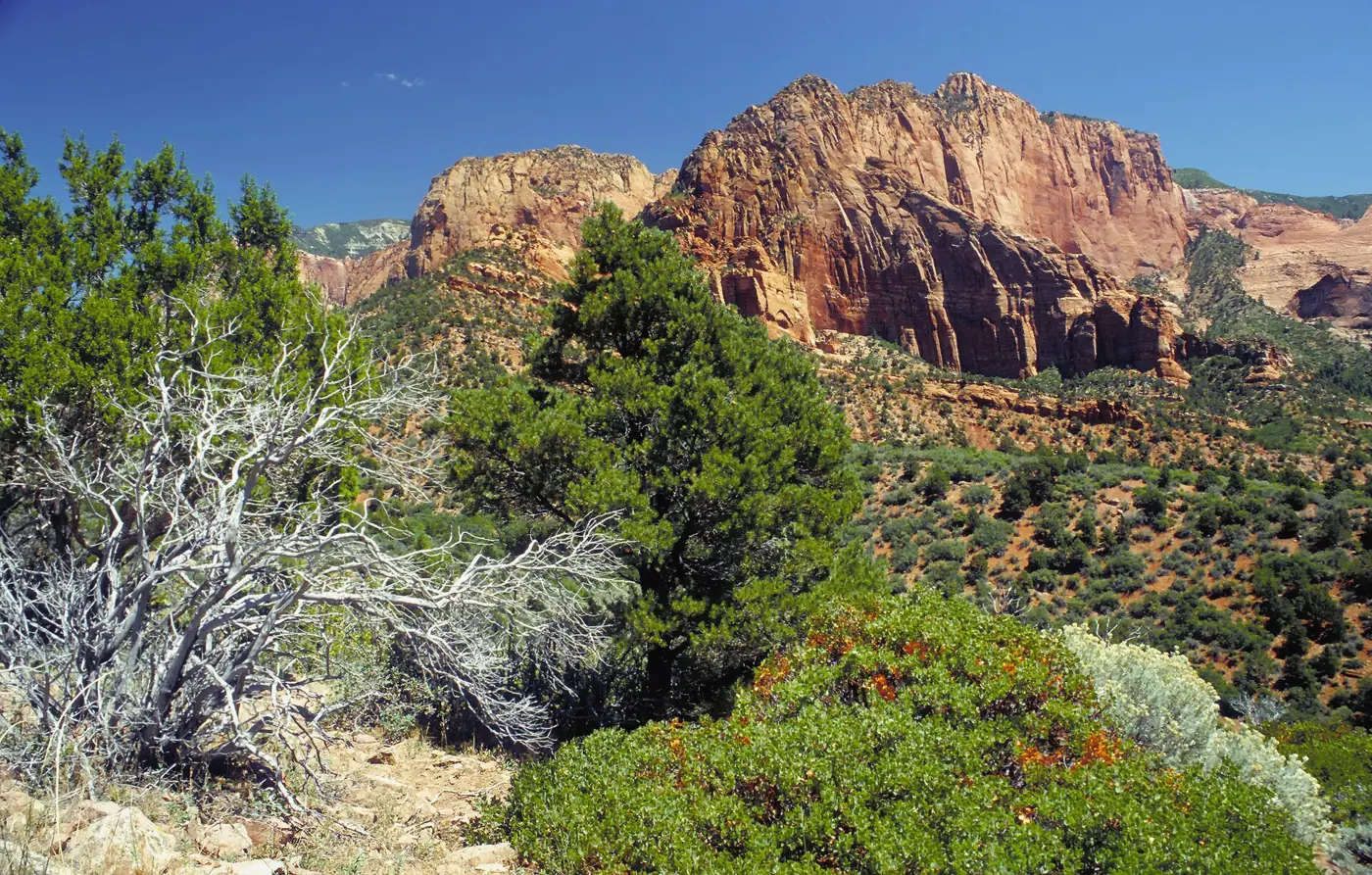
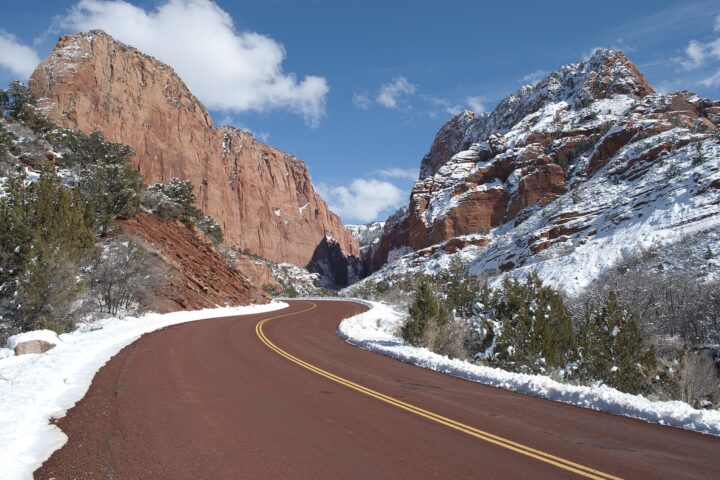
Kolob Canyons is a separate section of the park in the northwest corner, reached from Exit 40 on Interstate 15. NPS puts it about 40 miles north of Zion Canyon and about an hour’s drive away. A 5-mile scenic road leads to viewpoints and trailheads, and every visitor must stop at the Kolob Canyons Visitor Center to show a pass or pay the park fee. NPS warns that the Kolob Canyons Road may close in winter because of snow or ice. It is a good addition if you are driving between Zion and Cedar City or Las Vegas and have a spare half day. It is not a substitute for the main canyon.
Shuttle and getting around
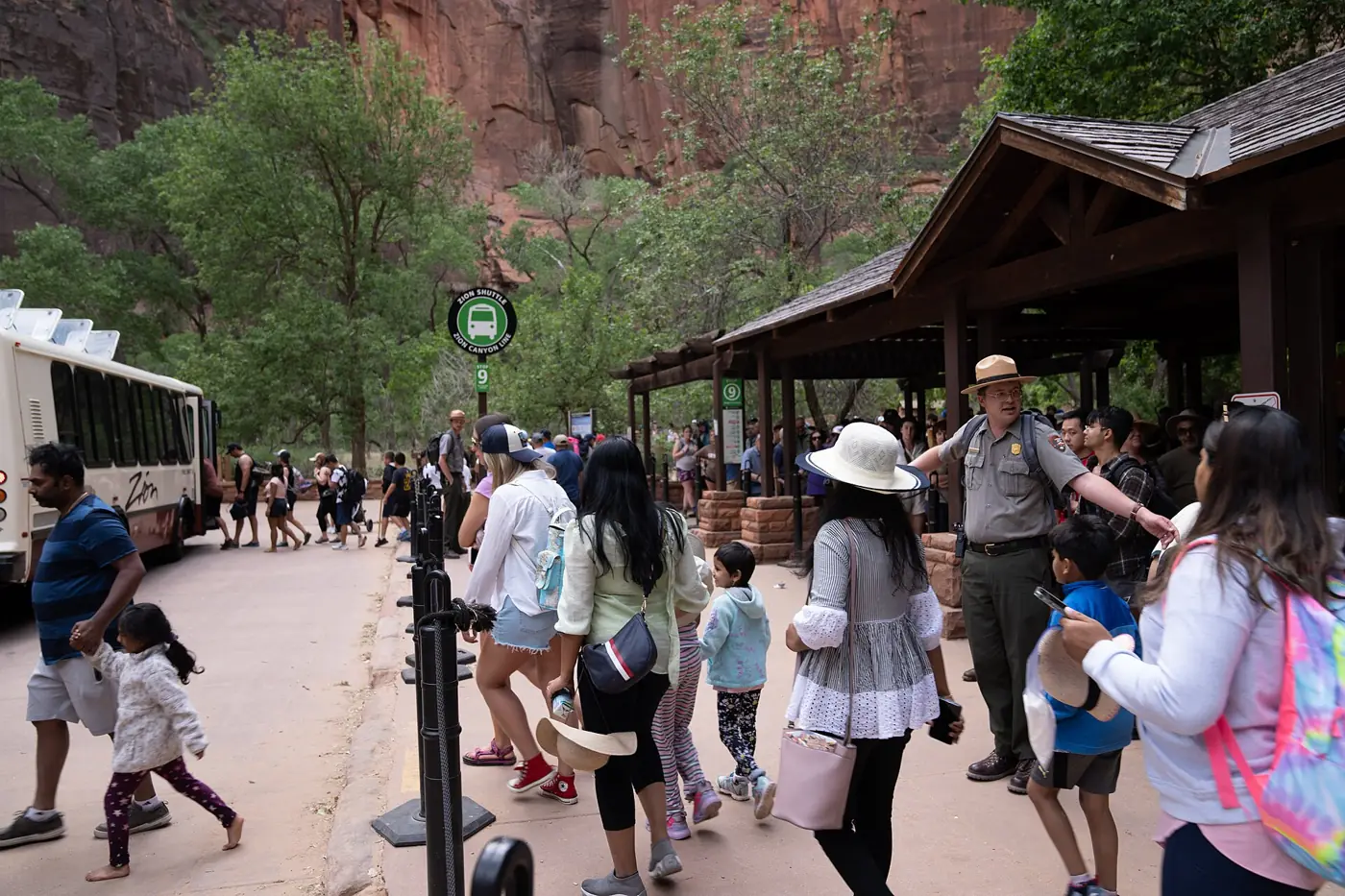
Two free shuttle lines operate in season, and neither needs a ticket or reservation, according to NPS:
- Zion Canyon Line (green signs): nine stops from the visitor center to the Temple of Sinawava, with buses about every 5 to 10 minutes. Stop 5 is Zion Lodge and Stop 9 is the end of the road.
- Springdale Line (orange signs): nine stops through town, with buses about every 10 to 15 minutes, ending at Zion Canyon Village, the park’s pedestrian entrance.
NPS lists these schedules on a page updated October 4, 2026. The page gives dates without years, so the years below are our reading of the current season. Times are first and last departures for the Zion Canyon Line from the visitor center, and the last bus out of the canyon is later:
| Dates | Zion Canyon Line (first / last from Stop 1) | Last bus out of canyon (Stop 9) |
|---|---|---|
| September 13 – October 24, 2026 | 7:00 am / 6:00 pm | 7:15 pm |
| October 25 – November 28, 2026 | 7:00 am / 5:00 pm | 6:15 pm |
| November 29 – December 25, 2026 | No service | No service |
| December 26, 2026 – January 2, 2027 | 8:00 am / 4:30 pm | 5:45 pm |
NPS says shuttles generally run daily from March through November in most years, but it lists no spring 2027 dates yet, so check the shuttle page for the start date. Parking lots in the canyon often fill early; paid parking is available in Springdale, and you can ride the Springdale Line into the park. Do not leave the canyon until the last bus: NPS warns that if the last shuttle is full or you miss it, you may have to walk nine miles back to the visitor center. NPS points to a SunTran bus service from St. George, with a Zion route that serves several towns along the way to Springdale, so you can leave your car in one of them; check SunTran for schedules.
Winter works differently. Our Zion in winter guide covers when you can drive the canyon yourself, which services close, and how to deal with ice.
Permits and access
Zion does not require a reservation or permit to enter the park or ride the shuttle; you need only the entrance fee or a valid pass. A few activities are different:
- Angels Landing: A permit is required for the chain section beyond Scout Lookout, issued through NPS lotteries. Scout Lookout itself needs no permit.
- The Narrows: No permit for the bottom-up day hike from the Temple of Sinawava. The top-down route needs a wilderness permit.
- Canyoneering, wilderness camping and campground stays: Permits or reservations are required. NPS explains how to get them on its permits page.
Lottery dates and fees change from season to season, so use the NPS Angels Landing page for current rules.
When to go
Zion is open all year, and each season trades something. Summer is hot: NPS notes highs regularly pass 100°F (38°C) in the canyon, and July to September is monsoon season, with frequent thunderstorms, lightning and flash flood risk. Winter is the quietest, with cool days, freezing nights and icy shade, and a different shuttle schedule. Spring and fall fall between those extremes, but the shuttle dates above show that the fall schedule shortens through October and November.
For the full winter picture, including snow, closures and traction advice, read our Zion National Park in winter guide. A guide to the other months is planned and is not yet published.
How many days do you need?
This is an editorial planning suggestion, not an NPS recommendation. Adjust for season, heat and permits.
One day
- Arrive early, park in Springdale if the canyon lots are full, and ride the shuttle to the Temple of Sinawava.
- Walk Riverside Walk, then work back down the canyon with a stop at the Emerald Pools or the Court of the Patriarchs.
- Finish with the Pa’rus Trail near the visitor center in the cooler hours.
Two days
- Day one as above, trimmed to leave energy.
- Day two: pick one longer hike, such as Angels Landing to Scout Lookout, a Narrows approach in good conditions, or Observation Point via East Mesa.
- Drive the Zion–Mt. Carmel Highway in the late afternoon, stopping at Checkerboard Mesa and Canyon Overlook.
Three days
- Add a half day at Kolob Canyons or a slower second canyon day.
- Use the third day for a nearby destination. Kanab is a quieter base with its own attractions, and Bryce Canyon is a long day trip or an overnight.
Getting to Zion
Our guide to the closest airport to Zion National Park compares the airports by drive time and convenience. If you are arriving on a road trip, the park’s two ends matter: the South Entrance near Springdale for the main canyon, and the East Entrance on the Zion–Mt. Carmel Highway.
Nearby places to combine with Zion
- Kanab, Utah: a small town about 30 to 35 minutes from the East Entrance, with Best Friends Animal Sanctuary, Coral Pink Sand Dunes and slot-canyon access.
- Bryce Canyon National Park: roughly 85 to 87 miles east by the direct route, covered with stops, timing and large-vehicle rules in our route guide.
- St. George, Cedar City and Las Vegas: useful on the way in or out. Our St. George guide covers Snow Canyon, Red Cliffs and the Dinosaur Discovery Site; guides to Cedar City and Las Vegas are planned and not yet published.
Safety and planning basics
- Water: NPS advises at least one gallon per person per day. NPS says you can refill at the visitor centers, campgrounds, Zion Lodge and some shuttle stops.
- Flash floods: They can happen at any time, often after thunderstorms, and can carry debris. Learn the warning signs before hiking.
- River water: Do not drink untreated water. NPS has warned of toxic cyanobacteria in the Virgin River.
- Cliffs and drop-offs: Falls have caused deaths. Stay on trails and back from edges, and watch children.
- Driving: The speed limit is 35 mph unless posted, and speeding vehicles kill mule deer.
Plan your Zion trip
Each guide below goes deeper on one decision:
- Best hikes in Zion National Park: distances, elevation, permits and access, ranked by effort.
- Zion National Park in winter: weather, shuttle gap, closures and what to do.
- Closest airport to Zion National Park: which airport to fly into and how far each is.
- Zion to Bryce Canyon: drive options, stops and timing, including large vehicles.
- Things to do in Kanab, Utah: activities, permits and how Kanab works as a base.
- Things to do in St. George, Utah: parks, museums, heat advice and a base for Zion.
Common questions
Is Zion worth visiting? For most first-time visitors, yes: the mix of paved walks, bigger hikes and a free shuttle makes the canyon workable without special gear. How enjoyable it is depends heavily on season and crowds.
Do you need a reservation for Zion? Not to enter the park or ride the shuttle. You need permits for Angels Landing’s chain section, top-down Narrows trips, canyoneering and wilderness camping.
How much does it cost? NPS lists $35 per private vehicle for 1 to 7 days, with passes available. Non-US residents 16 and older pay an additional $100 unless they hold an annual or America the Beautiful pass.
Can you drive through Zion Canyon? Not during the shuttle season. Private vehicles are usually allowed from December through February, apart from the holiday shuttle period.
What is the best time to visit? It depends on what you want. Summer is hot and stormy, winter is quiet and icy, and the shoulder seasons sit between those extremes. See the winter guide for details.