The drive from Las Vegas to Zion National Park covers about 160 miles and takes roughly 2.5 to 3 hours, mostly on Interstate 15 north into Utah, then east on State Route 9 through Springdale to the park’s south entrance. It’s one of the most popular day-trip and road-trip routes in the Southwest, easy enough for a single long day but better as an overnight if you want real time on the trails. This guide covers the fastest route, scenic detours, where to stop, what Zion charges and requires once you arrive, and how to handle an RV or oversize vehicle if you’re towing one.
Key points
- Distance and time: about 160 miles, 2.5–3 hours via I-15 to UT-9 through Springdale.
- Time zone: Nevada is on Pacific Time, Zion is on Mountain Time — add an hour when you cross the state line.
- Entrance fee: $35 per private vehicle; the America the Beautiful annual pass is accepted.
- Shuttle: required to reach Zion Canyon Scenic Drive during the March–November season; private cars are not allowed on it then.
- Day trip: doable with an early start, but expect only 5–7 usable hours in the park after the drive and time change.
In this guide
How far is Zion National Park from Las Vegas?
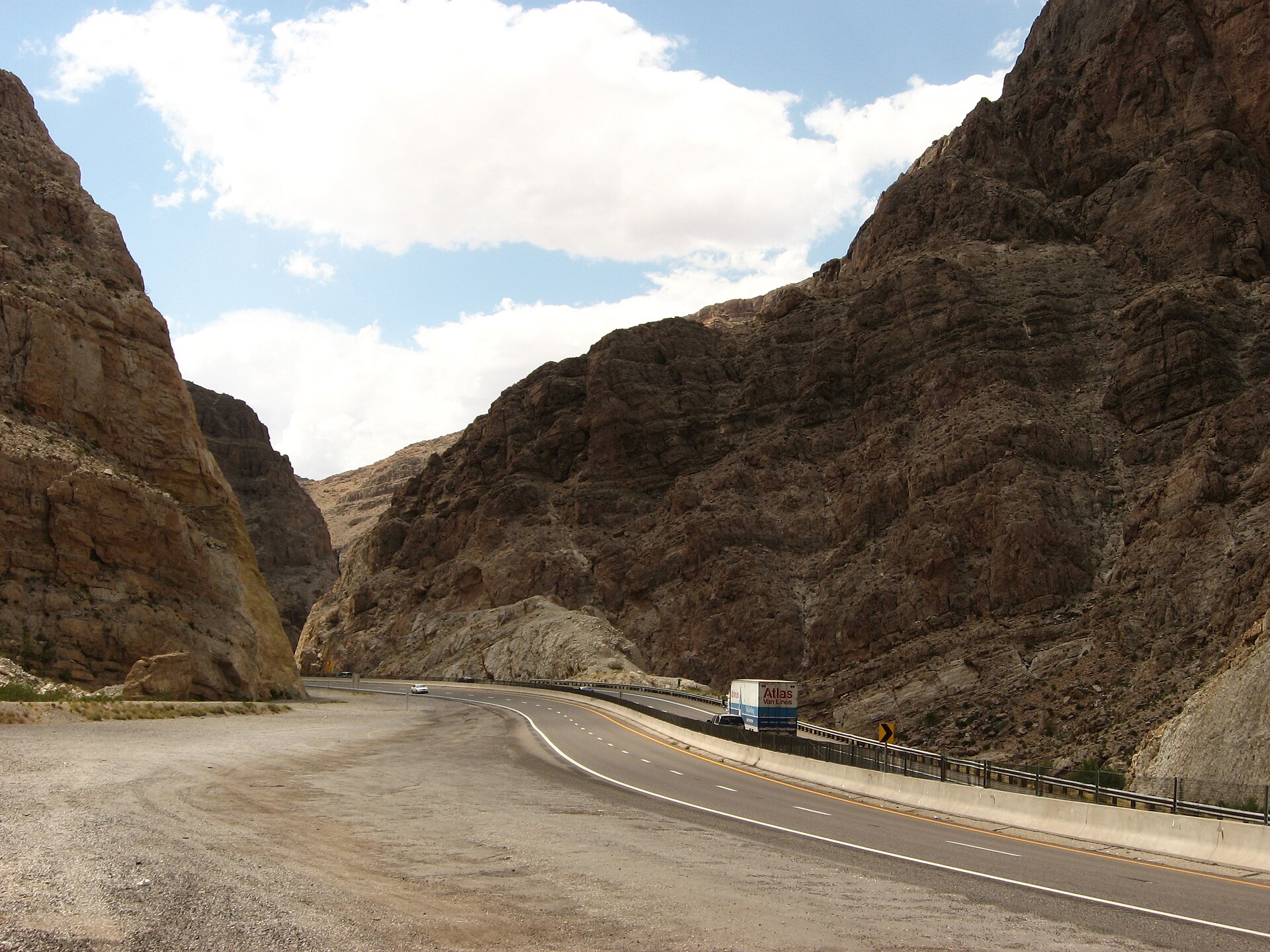
The direct route from Las Vegas to Zion National Park is about 160 miles and takes roughly 2 hours 40 minutes to 3 hours without stops. Almost all of it runs on I-15, a fast divided interstate, so the miles pass quickly until you exit toward the canyon for the final stretch. Traffic near the Las Vegas Motor Speedway or construction through the Virgin River Gorge can add 30 to 60 minutes, so budget extra time on weekends and holidays.
Best route: I-15 to UT-9 through Springdale
From Las Vegas, take I-15 north across the Nevada–Arizona–Utah tri-state area, through the Virgin River Gorge, to Exit 16 near Hurricane/La Verkin. From there, follow Utah State Route 9 east through Hurricane, La Verkin, Rockville and Springdale into Zion’s south entrance. This is the fastest and most direct way to reach the park and the route nearly every GPS app will default to.
Watch the clock on the way: Nevada observes Pacific Time and Utah observes Mountain Time, so you lose an hour crossing the state line. A 9 a.m. departure from Las Vegas effectively becomes 10 a.m. on arrival, which matters if you’re racing to beat parking or shuttle lines.
Scenic detours: Valley of Fire and beyond
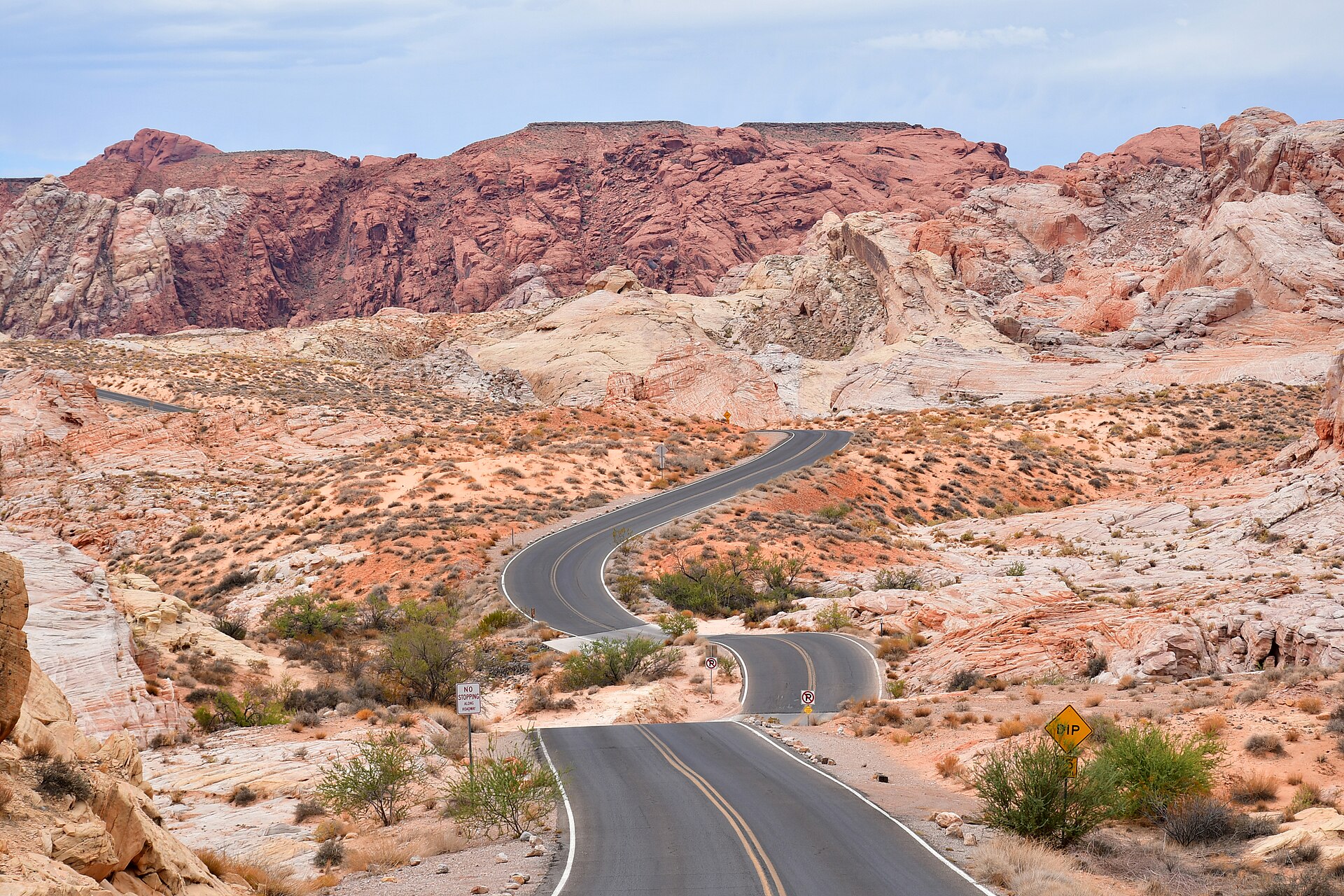
If you have extra time, the direct route isn’t the only option. A detour through Valley of Fire State Park in Nevada — reached via NV-169 off I-15 — adds red-sandstone scenery and short, easy hikes for roughly an hour of extra driving. Travelers who want to turn the drive into a longer loop sometimes combine Valley of Fire with Red Cliffs National Conservation Area near St. George, which stretches the trip to around 300 miles and 5 hours 20 minutes instead of the direct 2.5 to 3. A separate option routes travelers through the Grand Canyon’s North Rim on the way, which turns the drive into a roughly 530-mile, 9-hour undertaking best split across two or more days.
Best stops between Las Vegas and Zion
Whether you take the direct route or a detour, a few stops consistently make the drive better:
- Valley of Fire State Park, NV: red Aztec sandstone formations and short trails just off I-15 (added drive time, see above).
- Mesquite, NV: a convenient fuel, food and bathroom stop before the Virgin River Gorge.
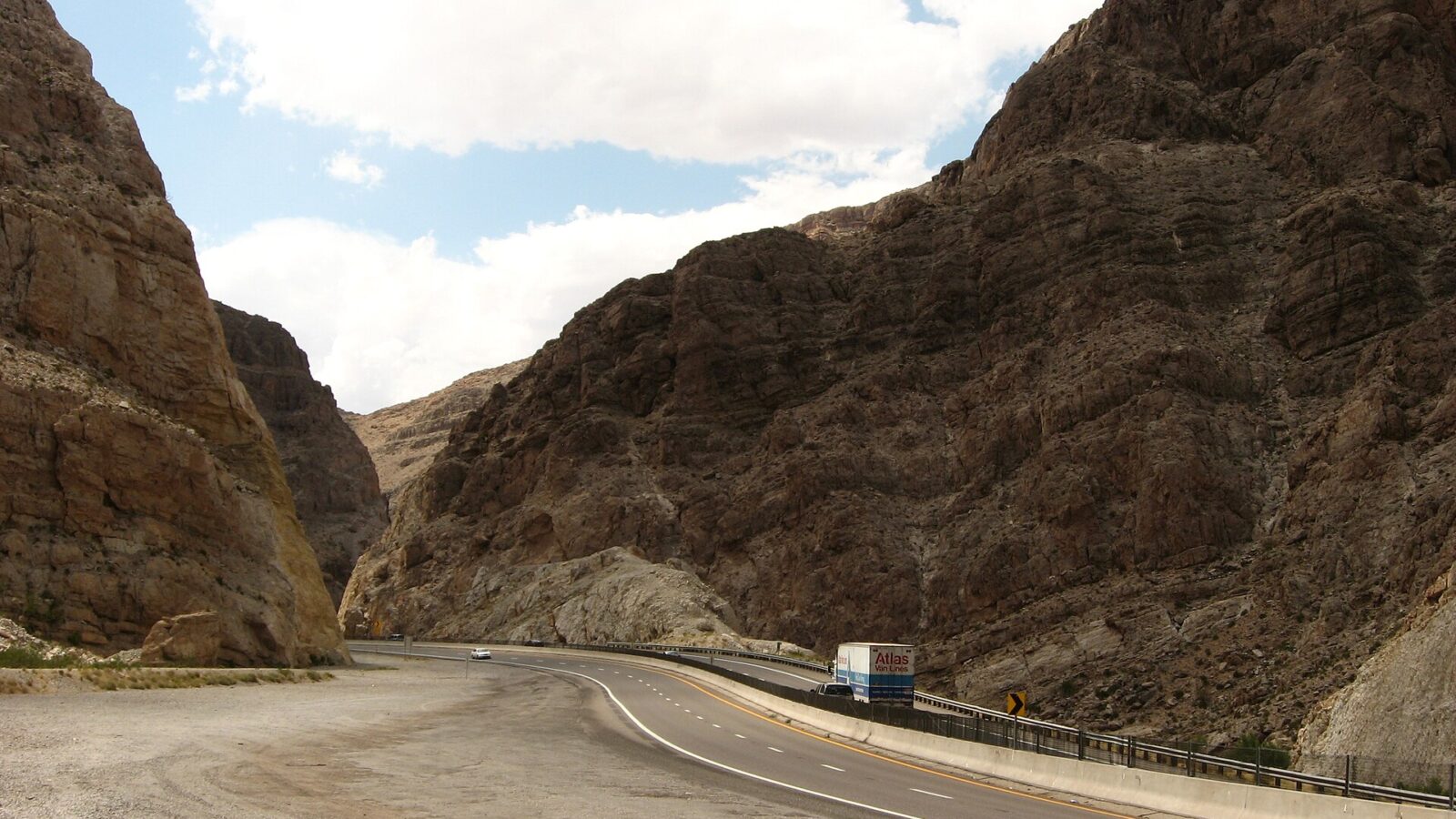
- Virgin River Gorge, AZ: a dramatic stretch of I-15 carved through the Beaver Dam Mountains — no exit needed, just enjoy the view.
- St. George, UT: the largest service hub on the route, with groceries, restaurants and EV charging; also a worthwhile stop in its own right if you have time to spare — see our guide to things to do in St. George.
- Sand Hollow State Park, UT: a red-sand reservoir just off the route, good for a short break if you’re not in a hurry.
- Springdale, UT: the gateway town at Zion’s south entrance, with dining, lodging and the free town shuttle.
Is a Las Vegas to Zion day trip worth it?
Yes, with the right expectations. Leaving Las Vegas by around 6 a.m. gets you to the park roughly 3.5 to 4 hours later once the time change is factored in, and parking at the main visitor center lot often fills by mid-morning. After a same-evening return, most day-trippers end up with about 5 to 7 hours actually inside the park — enough for the Zion Canyon Scenic Drive, one or two moderate trails such as the Riverside Walk or Emerald Pools, and lunch in Springdale, but not enough for an all-day hike like Angels Landing or The Narrows along with everything else. If you want more flexibility, an overnight in Springdale turns a rushed day into a relaxed one.
Zion entrance fees, shuttle and permits to plan around
A few logistics catch first-time visitors off guard, and they’re worth sorting out before you leave Las Vegas rather than at the gate.
Entrance fee: Zion charges $35 per private vehicle, $30 per motorcycle, or $20 per individual arriving on foot or by bike. The America the Beautiful annual pass ($80) covers entry. Non-U.S. residents aged 16 and over pay an additional $100 per person unless they’re covered by an annual or America the Beautiful pass.
Shuttle: During the park’s shuttle season, which generally runs daily from March through November plus a stretch around the winter holidays, private vehicles are not permitted on Zion Canyon Scenic Drive — you ride the free, reservation-free shuttle instead. Outside that window, typically December through February, you can drive the Scenic Drive yourself. Park lots fill early most mornings; paid parking is also available in the town of Springdale, connected to the park by a free town shuttle.
Angels Landing permit: If Angels Landing is on your list, you need a permit from recreation.gov to go past Scout Lookout (hiking to Scout Lookout itself doesn’t require one). A day-before lottery opens at 12:01 a.m. and closes at 3 p.m. Mountain Time the day before your hike, with a $6 application fee plus $3 per person if you’re selected. A seasonal lottery is also available for travelers who want to lock in a permit before their trip.
Driving an RV or oversize vehicle through the Zion–Mt. Carmel Tunnel
The direct Las Vegas route through Springdale doesn’t require the historic Zion–Mt. Carmel Tunnel at all — that only matters if you continue east through the park toward US-89. If your trip does continue that way, know the limits before you go: vehicles over 7’10” wide or 11’4” tall need traffic control to pass through the tunnel one direction at a time, and NPS caps single vehicles at 35’9” long, combined rigs at 50’ long (with a 26’ trailer max), and 50,000 lbs. Vehicles over those limits can’t pass between Canyon Junction and the east entrance, but can still enter the park through the south entrance near Springdale to reach the visitor center, Zion Lodge or designated campgrounds. Confirm current hours and procedures with the park directly before you plan a route that depends on the tunnel.
Where to stay and the best time to go
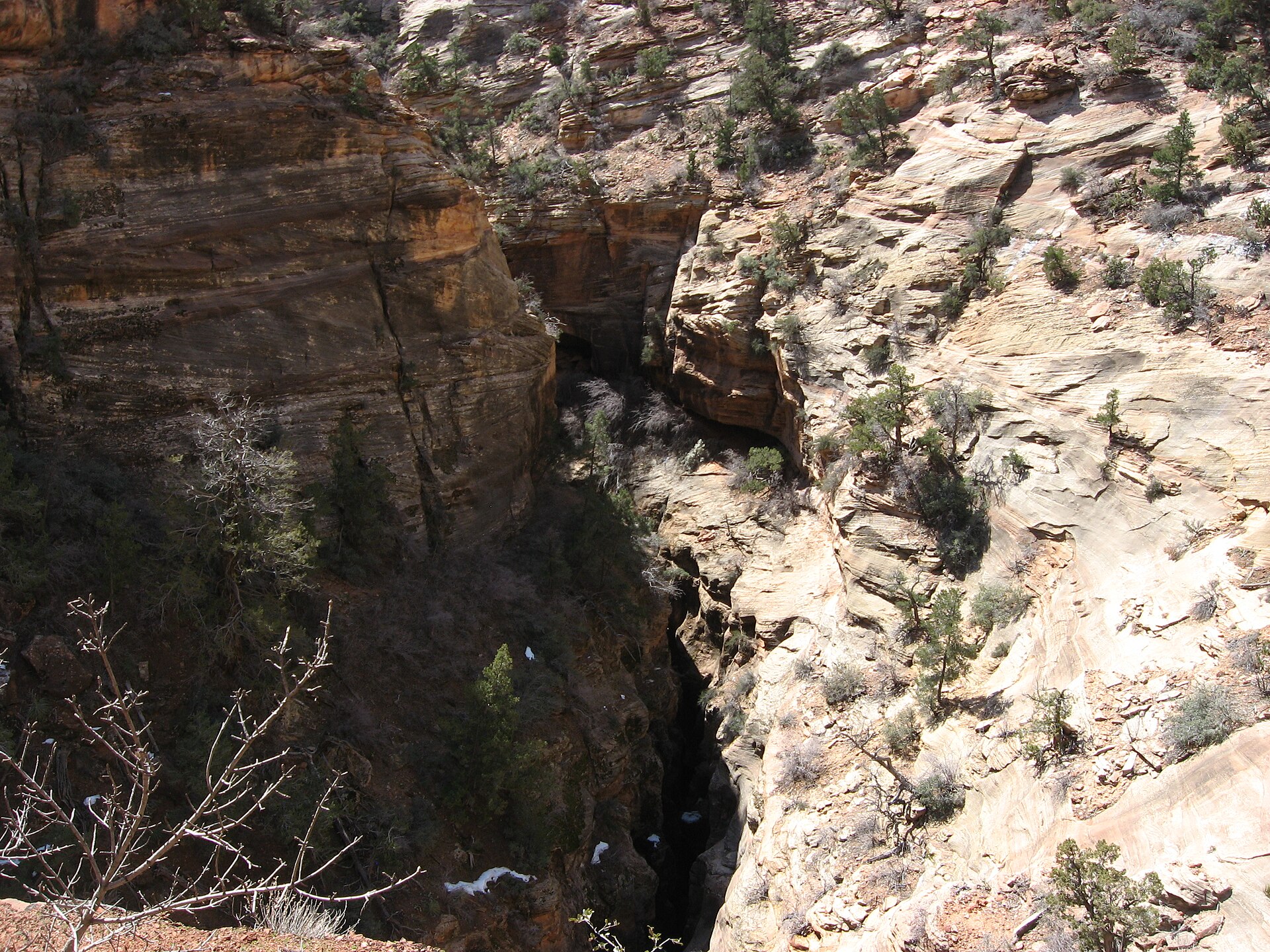
Springdale is the obvious base if you want to walk to the shuttle and the park entrance; expect higher rates and limited parking at smaller properties. Zion Lodge, inside the park itself, is the most convenient option for early trail starts but books out well in advance. St. George, about 45 minutes from the park, offers more rooms and lower rates at the cost of a longer daily drive.
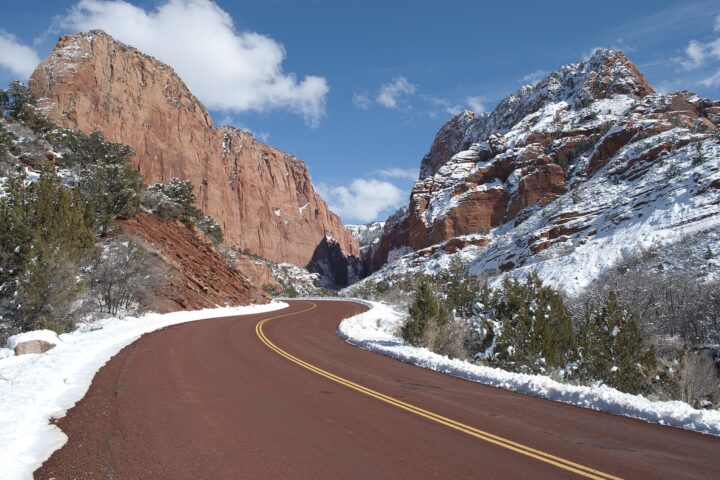
Spring (April–May) and fall (September–November) are generally the most comfortable times to visit, with milder temperatures and shorter shuttle lines than peak summer. Winter brings a quieter park and sometimes a snow-dusted canyon, but the Scenic Drive schedule and some trail conditions change — our guide to Zion National Park in winter covers what’s different.
Flying or touring instead of driving
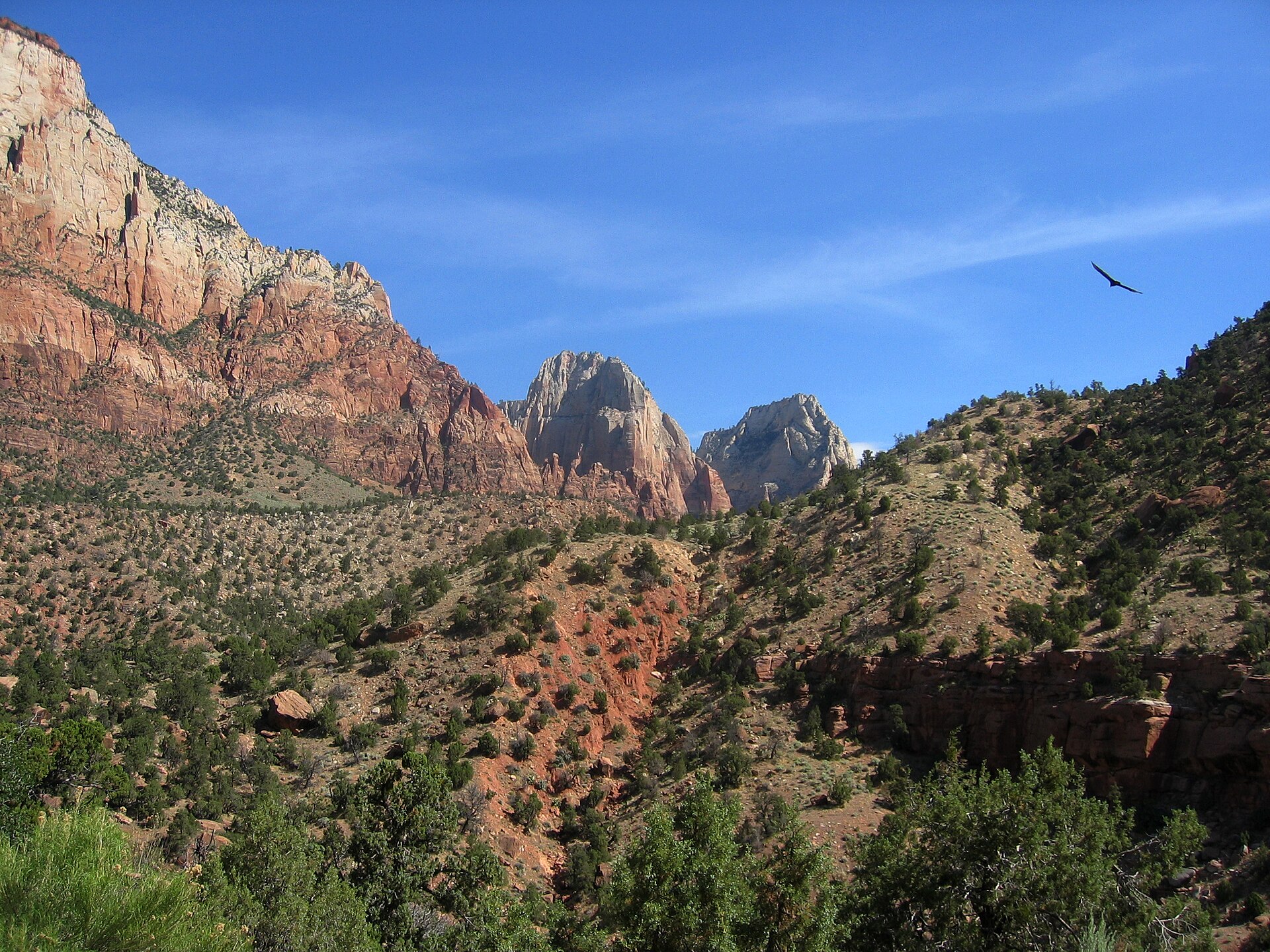
Not everyone wants to drive. Several operators run guided day tours from Las Vegas to Zion that handle navigation and parking for you, typically turning into a 10 to 14-hour day once pickup, driving and park time are added together; compare inclusions and cancellation policies before booking. If you’re flying in rather than driving from the Strip, our guide to the closest airport to Zion National Park breaks down St. George, Las Vegas and other options by distance and flight choice — useful context since this guide assumes you’re already driving from Las Vegas itself.
Sample itineraries
One-day trip: Leave Las Vegas by 6 a.m., drive I-15 to UT-9 through Springdale, and park or catch the shuttle by mid-morning. Prioritize the Zion Canyon Scenic Drive plus one or two moderate trails — see our guide to the best hikes in Zion National Park for options that fit a tight schedule. Build in buffer time for the return drive and the time change.
Weekend trip: Drive up Friday evening or Saturday morning, stay in Springdale, and spend a full second day in the canyon without the day-trip time crunch. Travelers continuing north often add Bryce Canyon; our Zion to Bryce Canyon guide covers that onward route and stops. For a broader overview of the park itself, see our Zion National Park travel guide.
Common questions
How far is Zion National Park from Las Vegas? About 160 miles, roughly 2.5 to 3 hours by the direct I-15 to UT-9 route.
Is there a time zone change between Las Vegas and Zion? Yes. Nevada is on Pacific Time and Utah is on Mountain Time, so you lose an hour heading to Zion and gain it back on the way home.
Can I do Zion as a day trip from Las Vegas? Yes, with an early start, though expect only about 5 to 7 usable hours in the park after the drive and time change.
Do I need a reservation to drive into Zion? No vehicle reservation is required, but you do pay the park entrance fee, and Zion Canyon Scenic Drive requires the shuttle instead of a private car during shuttle season.
Do I need a permit for Angels Landing? Yes, to go beyond Scout Lookout. Permits are issued through a day-before or seasonal lottery on recreation.gov.
Can I take an RV from Las Vegas to Zion? Yes on the direct Springdale route, which doesn’t use the Zion–Mt. Carmel Tunnel. The tunnel’s size limits only matter if you continue east through the park.
What’s the best time of year to make the drive? Spring and fall generally offer the most comfortable temperatures and shorter shuttle waits than summer.
However you plan it, the drive itself is short enough to be the easy part — the time you spend sorting out fees, shuttle timing and permits in advance is what actually determines how much of Zion you get to see.